How to share your entire screen?

Continue

Team of experts, ready to help

Join meeting here for your demo, support or onboarding session.

Deepa

Ms. Deepa

Lab Automation Guide

Hari

Mr. Hari

Lab Automation Guide

Ashu

Mr. Ashu

Lab Automation Guide

Mrs. Shalini

Mrs. Shalini

Customer Success Specialist

Ms. Priya

Ms. Priya

Customer Success Specialist

Ms. Riya

Ms. Riya

Customer Success Specialist

Ms. Aarti

Ms. Aarti

Customer Success Specialist

Mrs. Kirti

Mrs. Kirti

Customer Success Specialist

Mrs. Pooja

Mrs. Pooja

Customer Success Specialist

Mr. Abhishek

Mr. Abhishek

Support

Mr. Saubhik

Mr. Saubhik

Support

Join a meeting

1
Confirm your meeting time over call
2
Join meeting at scheduled time
3
Share entire screen during meeting

Legal Norms for Diagnostic and Pathology Labs in India: A Complete Guide

Ms. Gitika

By Gitika Chargotra

Created on: 23th July 2026

Running a diagnostic laboratory is not only about testing samples and generating reports. Every laboratory in India must follow certain legal rules and government regulations. These rules help ensure patient safety, report accuracy, proper waste disposal, and smooth business operations.

Many lab owners focus on increasing patients and revenue but often ignore legal compliance. This can lead to penalties, notices, or even closure of the laboratory.

In this article, we will explain all important legal norms for diagnostic laboratories in India in very simple language so that every lab owner can understand and follow them.

Why Legal Compliance is Important for Labs?


Following legal rules helps laboratories:

  • Build trust among patients and doctors
  • Avoid government penalties and fines
  • Improve report quality and accuracy
  • Protect patient information
  • Maintain professional standards
  • Grow the laboratory without legal issues

A legally compliant laboratory is more trusted by patients, doctors, hospitals, and corporate clients.

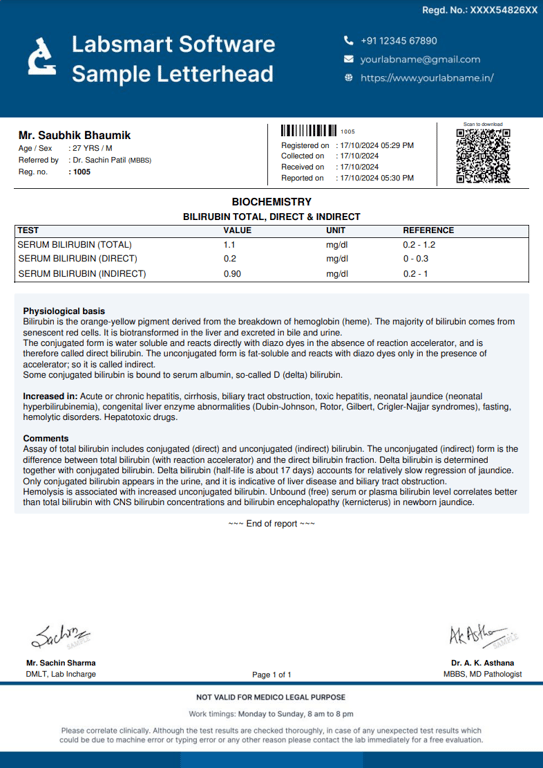
Sahi Reports Har baar

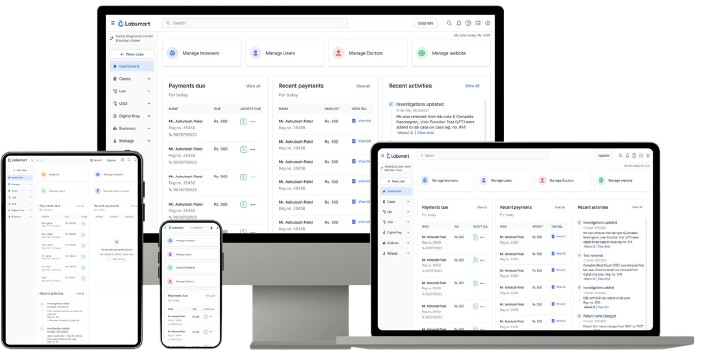
Start your 5 days free trial with Labsmart.

Report Preview

Business Registration and Legal Licenses


The first legal requirement is registering your laboratory as a business.

You can register your lab as:

  • Proprietorship
  • Partnership Firm
  • LLP (Limited Liability Partnership)
  • Private Limited Company

Most small and medium laboratories start as proprietorships, while larger labs prefer LLPs or private limited companies.

Having proper business registration helps in opening bank accounts, applying for licenses, taxation, and government approvals.

Trade License


Most local municipal authorities require laboratories to obtain a Trade License.

A trade license gives permission to operate a commercial business within a specific area.

The requirements may vary depending on the city or state where the laboratory is located.

Clinical Establishment Registration


The Clinical Establishments (Registration and Regulation) Act, 2010 is the central law that regulates the registration and minimum standards of healthcare facilities in India. Its main objective is to improve the quality of healthcare services, maintain patient safety, and ensure that clinical establishments meet basic operational standards.

However, healthcare is primarily a State subject under the Constitution of India. This means the Central Act does not automatically apply in every state. Some states have adopted the Central Act, while others have enacted their own Clinical Establishment laws. Therefore, the registration process and requirements may vary depending on the state where your laboratory operates.

In most states, diagnostic and pathology laboratories are considered clinical establishments and generally need to register before starting operations. The registration process usually requires information such as owner details, staff qualifications, infrastructure, equipment, and biomedical waste management compliance. Since the exact requirements differ from state to state, laboratory owners should always check the latest rules issued by their State Health Department.

Clinical Establishments (Registration and Regulation) Act, 2010 – Official Portal

This is the official government portal where you can access:

  • The Clinical Establishments (Registration and Regulation) Act, 2010
  • Rules and notifications
  • Standards
  • State adoption information
  • Registration-related resources

Qualified staff ensure accurate testing and reduce reporting errors.

Equipment Calibration and Maintenance


Laboratory equipment must be maintained regularly.

Machines should be:

  • Calibrated periodically
  • Serviced on time
  • Monitored for performance
  • Properly documented

Regular calibration ensures that reports remain accurate and reliable.

If equipment is not maintained properly, test results may become inaccurate.

Fire safety protects employees, patients, and equipment.

Display Required Documents


Important certificates and registrations should be displayed clearly within the laboratory.

These may include:

  • Trade License
  • Registration Certificates
  • Biomedical Waste Authorization
  • Staff Qualification Certificates
  • Fire Safety Certificates

Displaying documents improves transparency and trust.

Quality Control and Documentation


Every laboratory should maintain proper records for:

  • Sample collection
  • Quality control
  • Equipment maintenance
  • Staff training
  • Patient reports

Good documentation helps during inspections and audits.

It also improves overall laboratory management.

Safety and Environmental Compliance


Biomedical Waste Management Authorization


Every diagnostic laboratory generates biomedical waste.

Examples include:

  • Blood samples
  • Used syringes
  • Gloves
  • Test tubes
  • Sample containers

Improper disposal can harm people and the environment.

According to Biomedical Waste Management Rules, laboratories must:

  • Segregate waste properly
  • Use color-coded bins
  • Store waste safely
  • Hand over waste to authorized biomedical waste agencies

Proper waste management is one of the most important legal responsibilities of any laboratory.

Fire Safety Compliance


Laboratories must maintain basic fire safety measures.

These may include:

  • Fire extinguishers
  • Emergency exits
  • Electrical safety checks
  • Staff training

Fire safety protects employees, patients, and equipment.

Quality Standards and Accreditation


NABL Accreditation


Although NABL accreditation is not mandatory for every laboratory.

NABL (National Accreditation Board for Testing and Calibration Laboratories) accreditation demonstrates that a laboratory follows quality standards.

Benefits of NABL accreditation include:

  • Better trust among doctors
  • Improved report credibility
  • Eligibility for corporate and government contracts
  • Higher patient confidence

Many hospitals and organizations prefer NABL-accredited laboratories.

Patient Data Protection


Patient Data Privacy and Record Management


Laboratories collect sensitive patient information such as:

  • Name
  • Address
  • Phone number
  • Medical reports
  • Test history

This information must be protected.

Laboratories should:

  • Limit access to patient records
  • Use secure software systems
  • Store data safely
  • Prevent unauthorized sharing of information

Protecting patient privacy is both an ethical and legal responsibility.

Legal Rules Are Different in Every State


Many lab owners think that the same legal rules apply across India. This is not completely true.

Some rules are the same for every laboratory in India, such as biomedical waste management and patient safety. But many registrations, licenses, and approvals are decided by the state government.

This means a lab in Uttar Pradesh may have slightly different registration requirements than a lab in Bihar, Himachal Pradesh, Delhi, or Maharashtra.

Uttar Pradesh


Diagnostic laboratories in Uttar Pradesh need to follow the rules set by the Uttar Pradesh government along with central government regulations.

Lab owners should ensure they have the required registrations, follow biomedical waste management rules, employ qualified staff, and maintain proper records.

We will explain all the legal requirements for Uttar Pradesh in a separate detailed guide.

Want to know the complete legal requirements for diagnostic laboratories in Uttar Pradesh? Read our detailed guide on Legal Norms for Diagnostic Labs in Uttar Pradesh.

Bihar


Laboratories in Bihar also need to follow both central and state regulations.

Depending on the location and services offered, registration and licensing requirements may differ. Lab owners should also follow proper waste disposal rules and maintain quality standards.

A detailed Bihar compliance guide will be covered in another article.

Himachal Pradesh


Diagnostic laboratories in Himachal Pradesh must follow healthcare regulations issued by the state government along with national guidelines.

Lab owners should maintain proper documentation, employ qualified professionals, and ensure safe biomedical waste disposal.

We will cover the complete legal process for Himachal Pradesh in a dedicated blog.

Delhi


Laboratories operating in Delhi must comply with the regulations of the Delhi government as well as central healthcare laws.

Proper registrations, documentation, biomedical waste management, and patient record maintenance are important for smooth operations.

A separate Delhi compliance guide will explain these requirements in detail.

Maharashtra


Maharashtra has one of the largest healthcare sectors in India. Laboratories are expected to follow state-specific healthcare regulations along with national compliance requirements.

Maintaining proper licenses, qualified staff, equipment calibration, and documentation is essential.

A detailed Maharashtra legal compliance guide will be published separately.

Punjab


Diagnostic laboratories in Punjab should follow the applicable state healthcare rules along with central government regulations.

Keeping patient records safe, disposing of biomedical waste correctly, and maintaining laboratory quality standards are important legal responsibilities.

We will explain Punjab's legal requirements in a future blog.

Jammu & Kashmir


Laboratories in Jammu & Kashmir must follow the applicable healthcare regulations, local administrative requirements, and national laws.

Lab owners should ensure proper registrations, qualified staff, biomedical waste management, and accurate record keeping.

A complete guide for laboratories in Jammu & Kashmir will also be published soon.

Why You Should Know Your State's Rules


Even if two laboratories offer the same tests, they may need different registrations depending on the state where they operate.

Before opening or expanding your laboratory, always check the latest rules issued by your state health department or the concerned local authority.

Following your state's legal requirements helps you avoid penalties and run your laboratory smoothly.

Common Mistakes Made by Lab Owners


Many laboratories face compliance issues because they:

  • Ignore waste disposal rules
  • Delay equipment calibration
  • Hire unqualified staff
  • Fail to maintain records
  • Skip quality control procedures
  • Ignore renewal of licenses

Avoiding these mistakes can save a laboratory from legal trouble.

How Labsmart Helps Laboratories Stay Compliant


Managing compliance manually can be difficult as the laboratory grows.

Labsmart helps laboratories by:

  • Maintaining patient records digitally
  • Managing report history
  • Tracking laboratory operations
  • Reducing paperwork
  • Improving documentation
  • Supporting audit readiness

A digital laboratory management system makes compliance easier and more organized.

Conclusion


Legal compliance is not just a government requirement. It is essential for building a trustworthy and successful diagnostic laboratory.

From business registration and biomedical waste management to quality control and patient data security, every laboratory owner should understand and follow these rules.

A compliant laboratory gains the trust of patients, doctors, hospitals, and healthcare organizations. It also reduces legal risks and creates a strong foundation for long-term growth.

If you want your laboratory to grow professionally and sustainably, legal compliance should always be a top priority.

beautifully designed Lab reports

Try Labsmart & start customizing your reports

Report Preview

Frequently Asked Questions

No, NABL accreditation is not mandatory for every laboratory. However, it is highly recommended because it improves credibility and trust.

Biomedical waste management refers to the safe handling, segregation, storage, transportation, and disposal of medical waste generated by laboratories.

Most states require laboratories to obtain appropriate registrations and licenses before operating legally.

Calibration ensures that laboratory machines produce accurate and reliable test results.

The duration may vary depending on state regulations and laboratory policies. Proper record retention is strongly recommended.

The laboratory may face penalties, notices, suspension of operations, or legal action depending on the violation.

Labsmart helps laboratories maintain records, organize reports, manage documentation, and streamline operations for better compliance management.

Chat with us on WhatsApp

Start your 5 day free trial

OTP Required